
Why the name GivingTree?
Does it have anything to do with the book?

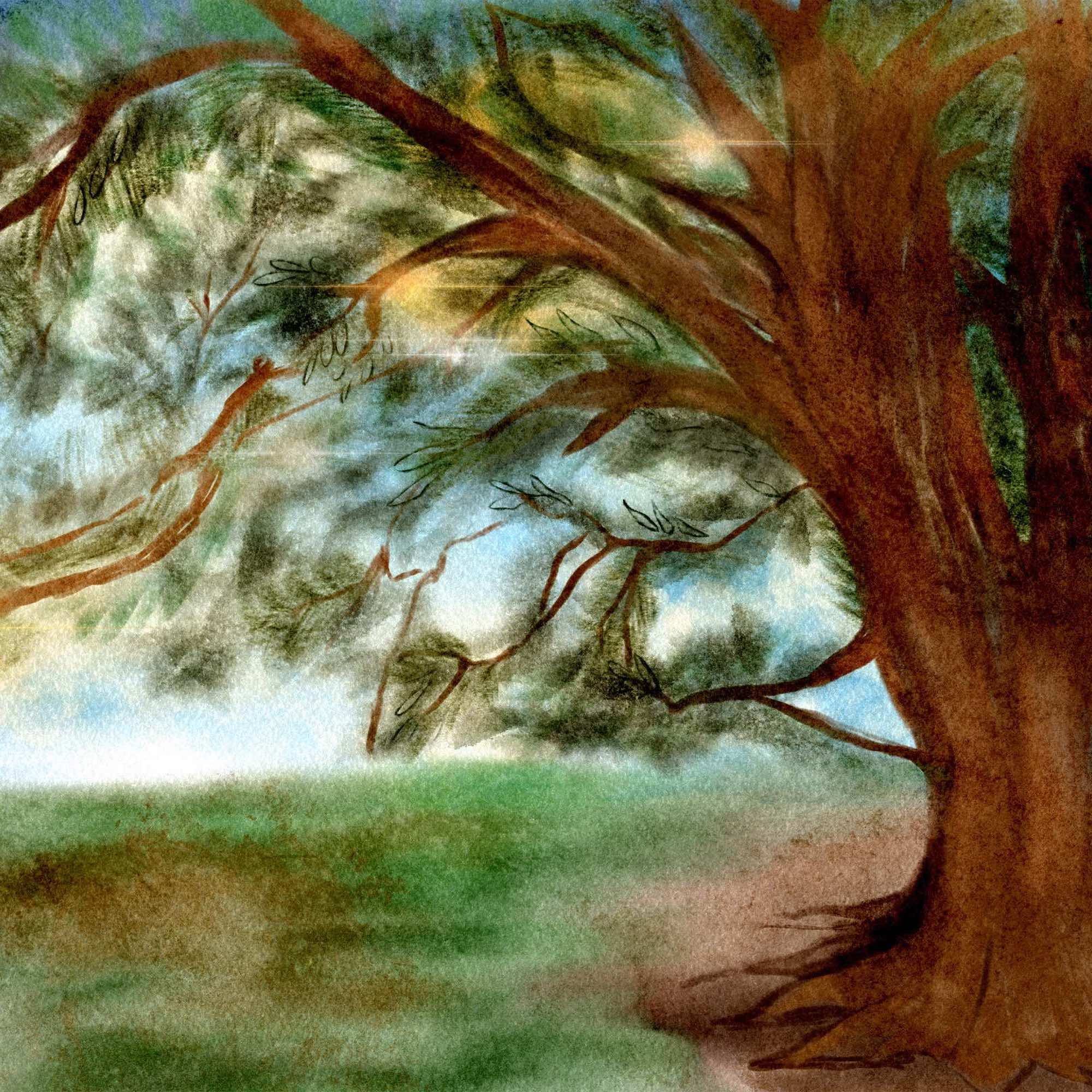
My wife’s friend read The Giving Tree and hated it.
My older sister has, for years, opposed the book’s message.
Lots of people feel this way about The Giving Tree. There’s a parody version, Topher Payne’s The Tree Who Set Healthy Boundaries, that jokingly mollifies those who dislike the original.
Yes, the story contains character flaws.
But that’s why I cry when I read it (and cried writing the next part this post).
The story begins with a tree who loves a little boy.
The boy comes every day to play. He climbs the tree and plays make believe, and when he’s tired he sleeps in her shade.
In the beginning, every line is a new page. This part is a fraction of the book’s word count, yet it takes up half the book’s physical space — kind of the way childhood feels like a lifetime.
But the boy gets older, and he leaves the tree all alone.
Decades pass.
Every time the boy comes back, he’s older, and he asks the tree for something he thinks will lead to happiness.
Every time, the tree is delighted to see the boy (who remains “the boy” as he ages). Over the decades, she gives him everything she has.
When I was a kid — from ages, say, seven to 20 — I had a long creative streak, mostly of poetry and music.
Outside of a few shining (yet fleeting) moments, I never shared the fruits of my creativity with the world.
Now I’m 34.
I have a beautiful wife and two amazing kids because my life has gone exactly as it’s gone. I wouldn’t change a thing. I’m still creative.
But I’ve clung to the idea that art, especially music, is my ultimate purpose, that I’ll fulfill that purpose some day. Pardon the cliché.
For most of the past two years, I’ve been physically in one spot, in the apartment where I live in my wife’s hometown in Brazil.
Imagine your self-narratives are a bundle of letters you’ve addressed to yourself.
They’re in your backpack.
Now sit down (say, on a tree stump), open your backpack, grab a letter, erase some words, and write new ones.
Read yourself the new letter and see how you feel. Or just crumple one up and throw it in the river. (Make sure it’s on fully biodegradable paper.)
It’s that easy to change our self-narratives.
If you say, “No it’s not!” well, that’s just another narrative.
Your narratives don’t control you. You control them.
To some, this is obvious.
To others, it might not click right away, even if you “get" what I’m saying. Just keep on your path. It will click in due time.
It’s freeing.
Since I was a teenager, I’ve been telling myself:
On one hand, I have a deep sense of self-worth. On the other hand, I have a surface-level insecurity that sabotages me every day.
This narrative tells me why music is my (so far unrealized) purpose in life. It is the boy asking the tree for its branches so he can build a house.
I’m letting it go.
That doesn’t mean music won’t be in my life. It means I’m unattached.
What’s more important than anything is fully stepping into my confidence. I’m taking out that letter and making an edit:
On one hand, I have a deep sense of self-worth. On the other hand, I have a surface-level insecurity that sabotages me every day.I’m confident.
So where does that put GivingTree?
I mean the name of my personal brand.
To answer the questions in the title of this post — the intention of the name GivingTree is different from the message of The Giving Tree.
The name GivingTree is about the symbiosis of systems, a meaning which is not quite reflected on my website’s homepage (as of this writing):

It’s not bad. It’s reads cleanly, and it’s accurate.
But it’s trying to sound “like it’s supposed to.” Notice the royal we.
From this point forward, GivingTree may become more personal (if this post is any indicator) or at least less impersonal. It may become a little spiritual.
It may be more about building and presenting something — something to do with the symbiosis of systems.
At the end of The Giving Tree (the book), the boy (now a very old man) has taken everything from the tree, who is now a mere stump.
She says she’s sorry she has nothing left to give.
The boy says that’s okay. He doesn’t need those things anymore. He just wants to sit down and rest.
And he does. And the tree is happy.
See if you can figure out what that means.